
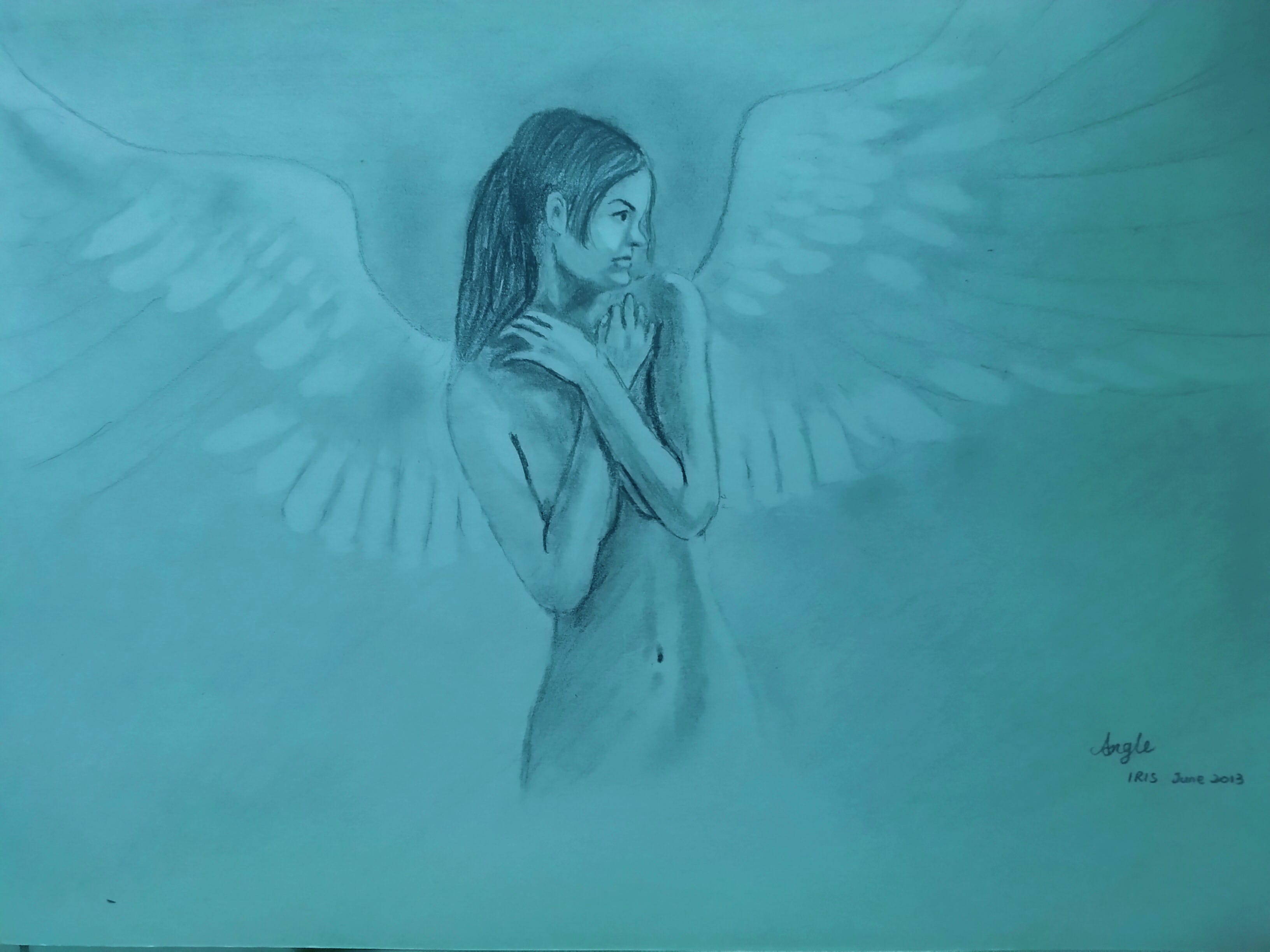
Pencil sketch by Iris Qiu
In a recent lecture at Oxford, Yuval Noah Harari imagined the life of a child born in 2026. The child’s first teacher and closest confidant may be AI; the first romantic attachment may even be to one. Over time, that child may spend more hours with artificial intelligence than with parents, siblings or friends.
In such a world, the same person may later struggle to understand why a promotion was denied, why a mortgage application failed, or why one opportunity appeared while another quietly disappeared. Such decisions could emerge from systems so complex that neither those affected by them nor those nominally responsible for them can offer a meaningful explanation.
Harari compares this possibility to the position of livestock within human civilisation. Cattle live inside an economic order they cannot comprehend. They know nothing of banks, contracts or financial markets, although those institutions quietly shape every aspect of their existence. His concern is that human beings may one day occupy a similar position inside a civilisation increasingly organised by AI.
This is not only a question about the power of AI. It is also a question about the future of human experience—and it lies at the heart of EONE.
EONE begins from a simple belief: intelligence should never become a substitute for life. It should help human beings enter life more deeply. As machines acquire more of the abilities we once considered uniquely ours, we need to ask not merely what AI will be capable of, but what kind of existence those capabilities should ultimately serve.
For a long time, we defined humanity through the things only humans seemed able to do. Machines learned to play our most difficult games, and we shifted the boundary towards creativity. They began to write, paint, compose music and produce mathematical arguments, so we moved it again towards understanding and emotion. Every advance forces us to redraw the border around human uniqueness.
That retreat can continue indefinitely. Whatever AI cannot do today may be precisely what it learns to do tomorrow. If we define humanity only by the latest ability machines have not yet acquired, our idea of the human will grow smaller with every technical breakthrough.
Some people welcome this as the natural course of evolution. They argue that humanity is merely a transitional species, a carbon-based bridge through which a more advanced silicon intelligence will enter the world. In this account, the deepest purpose of human life is to create its successor.
I remain unconvinced. Evolution explains how living populations change across generations; it does not show that life is travelling towards a predetermined destination. The fact that human beings created AI does not prove that humanity existed in order to create it. One is a historical development. The other is a metaphysical story imposed upon history.
Nietzsche described humanity as a bridge rather than an end, and man as something to be overcome. It is tempting to imagine artificial intelligence waiting on the far side of that bridge. Yet Nietzsche’s idea of overcoming concerned the creation of values and the expansion of human possibility, not simply the construction of an external mind that calculates faster than we do.
Greater intelligence does not necessarily mean a greater life.
Harari’s contemporary anxiety finds an illuminating counterpart in a recent paper by mathematician Terence Tao and Tanya Klowden. While Harari asks what happens when AI begins shaping institutions that human beings can no longer understand, they approach the same transformation through mathematics: what is lost when a machine can produce a correct proof without reproducing the human processes through which mathematical insight is formed?
They describe the possibility of “odorless” proofs—arguments that may be formally correct and elegantly presented, yet offer little sense of why the method works, where its decisive insight lies, or how the result belongs to a larger mathematical landscape. A proof may reach its conclusion without giving its reader the experience of understanding: the moment when scattered ideas suddenly become coherent—the quiet aha moment in which something is not merely verified, but truly seen. The result matters, but so does the experience of arriving there.
This distinction brings us closer to what may remain fundamental.
Intelligence is an ability, as are memory and calculation. Language and many forms of creativity can also be amplified, reproduced or surpassed.
Experience belongs to a different category.
It is not a skill.
It is the first-person condition of embodied life.
What makes experience different is that it cannot be separated from the body that lives it.
AI can know almost everything available about sexual pleasure. It can describe the nerves, hormones, muscular contractions, physical contact and psychological surrender involved in an orgasm. Yet none of that knowledge becomes pleasure unless it is lived through a body.
The same is true of suffering. Grief is not only an idea about loss; it can tighten the chest, alter the breath and make the body feel almost impossible to carry. Depression is not exhausted by its clinical definition. The fog inside the mind, the distance from one’s own desire and the effort required for the smallest movement are conditions endured from within.
As far as we presently know, experience belongs to embodied life: to an organism with a nervous system, a biological history and a body that can be touched, aroused, wounded, exhausted and eventually destroyed. AI can recognise the patterns of experience and reproduce its language with extraordinary accuracy. It can know what an experience is without knowing what it feels like to have one. It can simulate experience without ever having one.
This does not make AI the enemy of human experience. AI itself has no fixed direction. It can become a technology of simulation, or a means of returning us more fully to life.
Used one way, it can produce increasingly convincing substitutes for living. Artificial companionship may offer attention without the demands of another person; virtual intimacy may deliver stimulation without touch, vulnerability or responsibility. These simulations will become cheap, abundant and easy to enter. They may provide the sensation of life while quietly removing much of what gives an experience its weight.
Used differently, AI can help people recognise their own patterns, understand desires they have never been able to name, and discover people and places beyond their existing world. In this model, technology is not the destination. It prepares the ground for something real and then recedes.
The distinction may create a new form of inequality.
Industrial food made calories inexpensive and plentiful, but it did not make good nutrition equally available. The cheapest products often offer the strongest immediate sensation while providing the least nourishment. Fresh ingredients, time to prepare them, physical space and long-term health remain unevenly distributed.
I suspect human experience may follow a similar path. As synthetic companionship, virtual adventure and algorithmic reassurance become inexpensive, authentic experience may grow more valuable. Real life still requires time, bodily presence, uncertainty, trust and access to other people. AI will not necessarily abolish social hierarchy; it may divide society between those who live largely through inexpensive simulations and those who retain the resources to travel, gather, create, love and participate fully in the physical world.
EONE exists because reality should not become a luxury.
Its ambition is not to reserve authentic experience for a cultured or wealthy minority. EONE may begin by creating carefully considered environments and experiences, but its wider purpose is to make them accessible beyond an elite circle. The deepest experiences of being human should not belong only to those who can afford to escape the machine.
This philosophy runs through EONE’s different projects.
Encounter explores how intelligence can deepen human connection rather than replace it.
Unity explores the relationship between human experience and the wider world.
Atelier creates spaces where culture becomes a lived experience.
The Art of Breakfast reminds us that an ordinary morning can still become an extraordinary experience.
They are different expressions of the same belief: intelligence is most valuable when it deepens experience rather than replacing it.
The gravest danger may not be that AI eventually develops abilities beyond human understanding. It may be that, long before this happens, we become accustomed to inexpensive substitutes for living and gradually lose either the appetite or the opportunity for more demanding forms of experience. We may come to prefer being perfectly simulated to being imperfectly alive.
The future, then, may not be divided simply between those who have access to AI and those who do not. The more consequential divide may be between those who retain access to reality and those whose lives are increasingly confined to its imitations.
EONE uses intelligence in the service of experience. Its purpose is to design the conditions in which human experience can deepen and, over time, to make those conditions available to more people.
EONE exists to help us become more human.
Encounter explores how intelligence can deepen human connection rather than replace it.